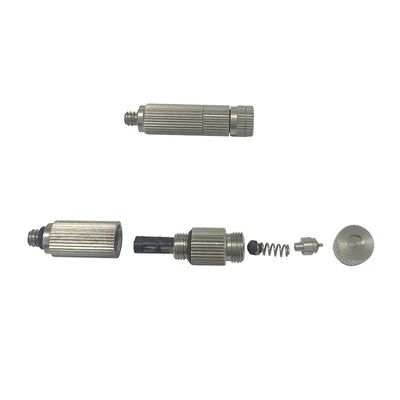
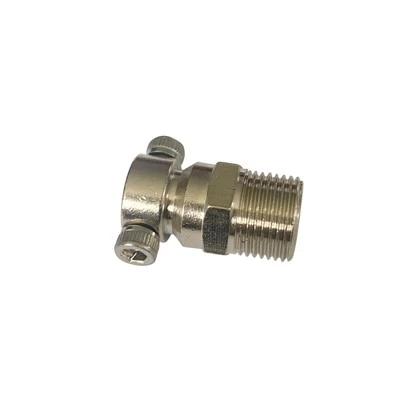
What Is An Fog Mist Nozzle?
Fog mist nozzle is a nozzle that can atomize the liquid and suspend it evenly in the air, Well -defined internal structure and precise aperture design provide uniform and fine spray effect. Fog mist nozzle orifice is very small, which can realize fine atomization. Fog mist spray nozzle is easy to be installed and replaced and can be fitted with a filter, easy to clean. Fog mist nozzles can be installed or replaced on most piping systems. The fog mist nozzle is available with NPT or BSPT (male) thread.Typically,1/8"-12/24" thread can be manufactured in Stainless steel (SS304, 316), brass , PP, etc.
Why Choose Us
Experience
We have been in the misting industry for over a decade, which has given us vast experience and knowledge in the production of top-quality misting systems. Our expertise ensures that our products meet the highest quality standards.
Quality
We use only the best materials and latest technology to manufacture our products, ensuring that they are long-lasting and efficient. Our products undergo rigorous quality checks during production to guarantee that they meet industry standards.
Service
We offer superb customer service and technical support. Our sales and technical team are always available to answer all your questions and concerns, offering guidance on product selection, installation, and maintenance.
Customization
We offer customization options to meet the specific needs of our clients. Our experienced engineers can work with customers to design and develop tailor-made misting systems to meet their unique requirements.
-
![Stainless Steel Ruby Pin Misting Nozzle]() Stainless Steel Ruby Pin Misting NozzleNozzle model: HH-LN-RSN-05. Thread: 1/8 NPT. Work pressure: 20-100 bar. Hole size: 0.15mm, 0.2mm, 0.3mm (other hole sizes can be customized). The hole is made of artificial ruby, which is sturdy and
Stainless Steel Ruby Pin Misting NozzleNozzle model: HH-LN-RSN-05. Thread: 1/8 NPT. Work pressure: 20-100 bar. Hole size: 0.15mm, 0.2mm, 0.3mm (other hole sizes can be customized). The hole is made of artificial ruby, which is sturdy and -
![Low Pressure Brass Misting Nozzle]() Low Pressure Brass Misting NozzleLow pressure brass misting nozzle. It can be used with pressures ranging from 3bar to 100bar. Orifice size: 0.2mm-0.8mm. It can be used for various scenarios such as agricultural humidification,
Low Pressure Brass Misting NozzleLow pressure brass misting nozzle. It can be used with pressures ranging from 3bar to 100bar. Orifice size: 0.2mm-0.8mm. It can be used for various scenarios such as agricultural humidification, -
![Stainless Steel Misting Nozzle With Filter Screen]() Stainless Steel Misting Nozzle With Filter ScreenSpecifications:Product Name: Stainless steel misiting nozzle with filter screenThread size: 10/24UNC, 3/16 (customizable thread)Nozzle material: stainless steelOrifice size: 0.1mm、0.15mm, 0.2mm,
Stainless Steel Misting Nozzle With Filter ScreenSpecifications:Product Name: Stainless steel misiting nozzle with filter screenThread size: 10/24UNC, 3/16 (customizable thread)Nozzle material: stainless steelOrifice size: 0.1mm、0.15mm, 0.2mm, -
![1/8 Stainless Steel Humidification Misitng Nozzle]() 1/8 Stainless Steel Humidification Misitng NozzleStainless steel humidifying nozzle.Thread: 1/8NPT.Material: Stainless steel. Use pressure of 30-100 barOrifice Size: 0.15mm, 0.2mm, 0.3mm, 0.4mm, 0.5mm, 0.6mm,0.7mm,0.8mmThe mist particles from the
1/8 Stainless Steel Humidification Misitng NozzleStainless steel humidifying nozzle.Thread: 1/8NPT.Material: Stainless steel. Use pressure of 30-100 barOrifice Size: 0.15mm, 0.2mm, 0.3mm, 0.4mm, 0.5mm, 0.6mm,0.7mm,0.8mmThe mist particles from the -
![Brass Nickel Plated Nozzle With Filter]() Brass Nickel Plated Nozzle With FilterNozzle model: HH-HN-NPNSCT-22 Thread: 10/24 UNC (other threads can also be customized, such as 12/24、 M5)。 Note: HH-HN-NPNSCT-22 is nickel plated brass material with ceramic holes, which is used for
Brass Nickel Plated Nozzle With FilterNozzle model: HH-HN-NPNSCT-22 Thread: 10/24 UNC (other threads can also be customized, such as 12/24、 M5)。 Note: HH-HN-NPNSCT-22 is nickel plated brass material with ceramic holes, which is used for -
![High Pressure Brass Humidifying Misting Nozzle]() High Pressure Brass Humidifying Misting NozzleThe high-pressure brass spray misting nozzle is made of high-quality brass material, the orifice is made of stainless steel, the orifice specification is 0.1-0.8mm, and the thread size is 10/24UNC
High Pressure Brass Humidifying Misting NozzleThe high-pressure brass spray misting nozzle is made of high-quality brass material, the orifice is made of stainless steel, the orifice specification is 0.1-0.8mm, and the thread size is 10/24UNC -
![Stainless Steel Integrated Cap Misting Nozzle]() Stainless Steel Integrated Cap Misting NozzleSpecifications:* Product Name: Stainless steel integrated cap Misting Nozzle* Nozzle model NO.: HH-HN-SNS-55 * Thread: 10/24 UNC, Threads can be customized* Working pressure: 20-100 bar,Equipped
Stainless Steel Integrated Cap Misting NozzleSpecifications:* Product Name: Stainless steel integrated cap Misting Nozzle* Nozzle model NO.: HH-HN-SNS-55 * Thread: 10/24 UNC, Threads can be customized* Working pressure: 20-100 bar,Equipped -
![Brass Slip Lock Nozzle]() Brass Slip Lock NozzleNickel Plated Brass Slip lock low pressure misting nozzle. Item: HH-LN-NFP-02.Material: Nickel plated platrd brass body with ceramic orifice.orifice:0.15、0.2、0.3、0.4、0.5、0.6、0.7、0.8mm.Socket: 6mm or
Brass Slip Lock NozzleNickel Plated Brass Slip lock low pressure misting nozzle. Item: HH-LN-NFP-02.Material: Nickel plated platrd brass body with ceramic orifice.orifice:0.15、0.2、0.3、0.4、0.5、0.6、0.7、0.8mm.Socket: 6mm or -
![45 Degree Nozzle Extension Base]() 45 Degree Nozzle Extension BaseProduct name: 45 degree nozzle extension baseItem: HH-NBEB-45Material: Nickel plated platrd brass.Connection port: 10/24UNC to 1/4 inchUsed for: connection of 1/4 slip lock joint and 10/24 threaded
45 Degree Nozzle Extension BaseProduct name: 45 degree nozzle extension baseItem: HH-NBEB-45Material: Nickel plated platrd brass.Connection port: 10/24UNC to 1/4 inchUsed for: connection of 1/4 slip lock joint and 10/24 threaded -
![Slip Lock Nozzle]() Slip Lock NozzleSlip lock low pressure misting nozzle. Item: HH-LN-NFP-02.Material: Nickel plated platrd brass body with ceramic orifice.orifice:0.15、0.2、0.3、0.4、0.5、0.6、0.7、0.8mm.Socket: 6mm or 8mm
Slip Lock NozzleSlip lock low pressure misting nozzle. Item: HH-LN-NFP-02.Material: Nickel plated platrd brass body with ceramic orifice.orifice:0.15、0.2、0.3、0.4、0.5、0.6、0.7、0.8mm.Socket: 6mm or 8mm -
![Low Pressure Misting Nozzle Push lock Type Misting Nozzle (Φ6mm、Φ8mm)]() Low Pressure Misting Nozzle Push lock Type Misting Nozzle (Φ6mm、Φ8mm)(Φ6mm、Φ8mm)Low pressure micron misting nozzle. Mist Nozzle, Cooling Nozzle, Sterilizing nozzle, Fog Nozzle manufacturer / supplier in China, Match with pneumatic joint for quick installation. It can
Low Pressure Misting Nozzle Push lock Type Misting Nozzle (Φ6mm、Φ8mm)(Φ6mm、Φ8mm)Low pressure micron misting nozzle. Mist Nozzle, Cooling Nozzle, Sterilizing nozzle, Fog Nozzle manufacturer / supplier in China, Match with pneumatic joint for quick installation. It can -
![Low pressure misting nozzle disinfection nozzle]() Low pressure misting nozzle disinfection nozzleLow Pressure Misting Nozzle, Low Pressure Greenhouse Nozzle, Greenhouse Misting Nozzle manufacturer / supplier in China, offering Low Pressure Greenhouse Fogging Irrigation Misting Nozzle, Spraying
Low pressure misting nozzle disinfection nozzleLow Pressure Misting Nozzle, Low Pressure Greenhouse Nozzle, Greenhouse Misting Nozzle manufacturer / supplier in China, offering Low Pressure Greenhouse Fogging Irrigation Misting Nozzle, Spraying


The misting nozzles we offer including cooling system nozzle, stainless steel fog nozzle, brass misting nozzle, high pressure brass spray atomizing nozzle, stainless steel fine atomizing nozzle and more. Misting nozzles are widely used in a variety of spray products, such as insecticides, air fresheners, and pharmaceutical sprays.
The misting nozzles are capable of atomizing a liquid and uniformly suspending it in the air. The working principle is that the internal liquid is squeezed into the nozzle by internal pressure, and a piece of iron is placed inside the nozzle, and the high-speed flowing liquid impinges on the iron piece, and rebounds to form atomized particles, and sprayed through the nozzle outlet.
The misting nozzle sprays a small mist, the same nozzle is the effect of spraying no fog, and the air compressor is required to spray the mist. Generally, the misting nozzles do not need any compressor, and the water pipe is directly connected. The water has a certain pressure to spray a spray effect such as a fan shape, a conical shape, and a round shape. The atomizing nozzle has only a spray pattern of both fan and round.
The misting nozzles can eject very fine particles, creating a mist spray. No need to use compressed air, hydraulic pressure can be used to form a very fine atomized spray. Most nozzles have a built-in strainer. A variety of nozzles are detachable for easy cleaning and installation. The fine misting nozzles are wall mounted and can be mounted on containers, pipes and exterior walls.
The most professional manufacturer and supplier of misting nozzles in China. Our factory applies the most advanced technology and equipment to produce quality and durable misting nozzles. With many quality misting nozzles for selling, we warmly welcome you to buy our products.
Features:
1. By automatically adjusting the pressure of water and gas, the amount of spray water can be continuously adjusted between the maximum design flow and zero.
2. The atomized water mist covers a large area and can be mixed with the flue gas more fully, which is beneficial to the flue gas cooling and adjusting.
3. The air consumption required is low, saving energy and reducing the cost of atomization.
4. The special atomization tower and spray system are designed to achieve the most efficient mixing of flue gas with fine water droplets and water vapor and reflectors.
Application:
Paper mill, textile industry, electronics factory, pharmaceutical factory, garbage disposal, dust removal, smoke removal, waste gas treatment, etc.
Advantages of Misting Nozzles
Cooling effect - One of the main purposes of misting nozzles is to provide evaporative cooling. As the water mist evaporates, it draws heat away from the surrounding air, providing a cooling effect. This is useful for outdoor areas on hot days.
Humidity control - Misting nozzles can help increase humidity levels in dry indoor or outdoor environments. The fine water particles released into the air evaporate, adding moisture to the surrounding atmosphere.
Dust suppression - The water mist can help settle dust particles. The moisture binds dust and other airborne particles together so they fall to the ground rather than floating through the air. This is beneficial in arid areas.
Reduced water usage - Misting nozzles use much less water than other irrigation methods like sprinklers since they disperse a very fine mist. This makes them more water efficient.
Targeted coverage - Misting nozzles allow for precise misting of specific areas rather than wide area coverage. This means water is not wasted on surfaces that don't need to be misted.
Easy installation - Misting nozzles are generally simple and inexpensive to install. They can usually be mounted directly onto existing water lines or tanks.
Low maintenance - Properly installed misting nozzles require little maintenance over time. They have fewer moving parts than sprinklers.
Application effect of misting nozzle spray system


Automatic spray, humidification, cooling and disinfection: It can realize the automatic periodic cycle spray in each field, section and workshop, and simultaneously have the function of manual control spray operation.
Automatic induction temperature control, the machine can sense the indoor temperature change, if set at 28 degrees Celsius to start spraying, when the indoor temperature reaches 28 degrees, the machine starts to work automatically, humidification and cooling; When the temperature is below 28 degrees, the machine will automatically stop working and the temperature can be set manually.
Atomized particles 10-30 micron: high pressure tube, nozzle, easy installation; Equipped with two water impurities filter, multiple filtration protection, effectively avoid the hole blockage, nozzle for laser drilling anti-drip stainless steel nozzle, ceramic spray piece, atomized particles 10-30 microns, no rain.
Automatic water adding, there is no water in the tank, can automatically add water, when the water level reaches a certain limit, automatically stop water.
Save labor, high work efficiency.Many restaurants, resorts and hotels like to use spray cooling systems in outdoor swimming pools. By placing spray cooling systems around the pool, the water mist not only lowers the temperature, but also creates a mist-filled feeling over the water.

Misting nozzles are the final step of a system that combines water volume (flow rate) with water pressure to deliver a spray with droplets small enough to cool the air.
A hose or pump pressurizes water and forces it through a nozzle whose small opening (“orifice”) creates a high-speed stream of water droplets. The smaller the orifice, the smaller the droplets. The smaller the droplets, the more effectively the water can cool the air.
Higher water pressure allows the water to exit the nozzle at higher speeds, creating smaller droplets that evaporate more quickly and provide better cooling. Low water pressures can’t force water through the smaller orifices, so lower pressure systems use larger nozzles, which can result in less cooling effect and a wetter mist.
However, higher pressure also means using more water. By selecting an appropriate nozzle size and finding the right balance between water pressure and flow rate, you can ensure that your misting system is both effective and efficient in cooling your outdoor space.
How to choose the size of Misting Nozzle
Flow Rate: Consider how much water you want the nozzle to dispense per minute. Nozzles are rated by GPH (gallons per hour) or LPH (liters per hour). Higher numbers mean more flow.
Droplet Size: Nozzles create different size mist droplets. Finer mists evaporates faster but may be blown away easier. Larger droplets have more cooling impact but may pool on surfaces.
Distance: Nozzles have optimal coverage ranges, usually 5-15 feet. Make sure to choose a throw distance that matches your intended usage area.
Water Pressure: Nozzles need 15-65 PSI of water pressure to function properly. Match the nozzle to your water source pressure.
Application: Consider what you're misting - plants, walkways, patio furniture, etc. and pick a nozzle optimized for that surface material/use.
Material: Brass or stainless steel nozzles are more durable. ABS plastic is cheaper but may deform under sun exposure.
Orifice Size: Typically 1/4", 1/8" or 1/16" orifice sizes. Smaller orifices create finer mists but use more pressure.
How to choose the Misting Nozzle connection size
-
Determine the water supply line size coming into your system. Most common are 1/2 inch and 3/4 inch supply lines. The nozzle connection size should match this line size.
-
Consider the flow rate and coverage area needs. Larger connection sizes like 1/2 inch will provide higher flow rates than smaller sizes like 1/4 inch. Choose a size that can adequately cover your desired area while maintaining good pressure.
-
Check the connection thread type. Most misting nozzles use standardized pipe thread types like 1/4-27 NPSM or 1/2-14 NPSM. Make sure your fittings and nozzles all use the same compatible thread.
-
Look at the operating pressure range. Nozzles are generally rated for 15-40 PSI, 60-100 PSI or higher pressures. Match nozzles to your system's operating pressure.
-
Consult charts provided by misting system or nozzle manufacturers. They often specify optimal connection sizes based on common application areas like patios, decks, greenhouses, etc.
-
Consider scale and layout. Larger areas may need more, higher-flow nozzles compared to smaller zones. Proper spacing is also important for uniform coverage.


Use the appropriate size nozzle for the area you want to mist. Nozzles come in different sizes to produce different droplet sizes and coverage areas. Measure your space and choose nozzles accordingly.
Mount nozzles securely onto the misting pipe/line. Use hose clamps or other fasteners that won't cause leaks over time. Nozzles should point straight down when installed.
Space nozzles evenly along the pipe. Follow manufacturer recommendations for nozzle spacing based on your nozzle type and size. Even spacing ensures consistent coverage.
Install solenoid valves between zones if splitting the system into sections. This allows individual control of each zone.
Use flexible misting tubing rather than rigid pipes where possible. Flexible tubing allows for movement from expansion/contraction and is less likely to kink or crack.
Consider adding filters and regulators to the water supply line to protect nozzles from debris. Dirt and minerals can clog nozzles over time.
Check for leaks during your initial test run. Tighten any connections that sputter or leak before long-term use.
Stake down or secure ground lines so nozzles aren't moved out of position by sun, wind, animals etc. This ensures stable coverage.
Material of Misting Nozzles
-
Brass - Brass is a popular material for misting nozzles due to its resistance to corrosion. Brass holds up well against moisture and chemicals in water. It provides durability.
-
Plastic - Plastic nozzles are more affordable than metal options. Common plastics include polypropylene and nylon. Plastic nozzles can be flexible for bending to direct mist. However, plastic may not last as long in very harsh conditions.
-
Stainless steel - Stainless steel has excellent corrosion resistance, even in high mineral or salt content water. It stands up well to chemicals that could deteriorate other metals over time. Stainless steel misting nozzles are durable for outdoor or industrial use.
-
Nickel-plated brass - The nickel plating helps protect brass from corrosion. It provides an extra layer of protection, especially for nozzles used with fertilizers, pesticides or treated water containing chemicals.
-
Copper - Copper nozzles have good resistance to corrosion but are more expensive than brass. Copper has natural antimicrobial properties that help prevent bacteria growth within the nozzle.

Types of Misting Nozzles

Fan Nozzles
Full Cone Nozzles
Adjustable Cone Nozzles
Wide-Angle Nozzles
Rotary Nozzles
Low Flow Nozzles
Micro Misters
Fog Nozzles
Application of Misting Nozzles
-
Cooling/misting systems - Misting nozzles are often used in outdoor cooling or misting systems to provide evaporative cooling on hot days. They create a fine mist that cools the air as it evaporates. Common uses include misting systems for outdoor patios, playgrounds, dining areas, etc.
-
Horticulture/greenhouse misting - Nozzles are used in greenhouse misting systems to provide moisture to plants. A fine mist helps plants absorb water and minerals through their leaves without excess runoff.
-
Dust suppression - Misters can be used to control dust on paths, construction sites, mining operations, etc. The fine mist binds dust particles together and causes them to settle.
-
Air purification - Nozzles create a mist that removes particles from the air through inertial impaction as water droplets absorb pollutants. Used in some industrial air cleaning systems.
-
Fire protection - Misting systems use nozzles to discharge water into the air to help control and suppress fires. The small droplets evaporate quickly to provide a blanket of moisture.
-
Decorative fountains - Nozzles produce a fine mist for decorative fountains that floats in the air like a cloud. Often used for water wall features.
-
Humidification - Misters are employed in commercial and industrial humidification systems to increase ambient humidity levels.
-
Odor control - Misting systems distributing fragranced water are used for odor control in some industrial, agricultural and waste applications.

Sizes of Misting Nozzle
The smallest standard nozzle orifice available. At 1,000 psi, the mean diameter of the droplets from this size orifice are 12.2μ with droplets ranging from 1.2μ to 36.4μ and a spray diameter of approximately 45 degrees. The .006″/.15mm misting nozzle is ideal for applications requiring extremely low flow with small droplet size and minimal moisture. It is most commonly used for humidification applications. This nozzle is not designed to be used at pressures below 500 psi.
The next-smallest standard nozzle orifice available. At 1,000 psi, the mean diameter of the droplets from this size orifice are 12.7μ with droplets ranging from 1.4μ to 37.9μ and a spray diameter of between 60 and 65 degrees. The .008″/.20mm misting nozzle is ideal for applications requiring low flow with small droplet size and limited moisture. It is most commonly used for humidification and cooling applications. This nozzle is not designed to be used at pressures below 250 psi.
The medium-sized standard nozzle orifice. At 1,000 psi, the mean diameter of the droplets from this size orifice are 13.1μ with droplets ranging from 1.6μ to 39.1μ and a spray diameter of between 65 and 75 degrees. The .012″/.30mm misting nozzle is ideal for applications requiring moderate flow with small droplet size. It has a similar performance to the .008″/.20mm orifice nozzle with an increased flow rate. It is most commonly used for outdoor cooling and odor/dust control applications. This nozzle can be used with any pressures above 100 psi.
A larger-sized nozzle orifice. At 1,000 psi, the mean diameter of the droplets from this size orifice are 14.8μ with droplets ranging from 3.8μ to 47.9μ and a spray diameter of between 70 and 80 degrees. The .016″/.40mm misting nozzle is ideal for applications requiring increased flow rates with moderately sized droplets. It is most commonly used for special effects and outdoor dust control applications. This nozzle can be used with any pressure.
The largest sized standard nozzle orifice. At 1,000 psi, the mean diameter of the droplets from this size orifice are 15.2μ with droplets ranging from 9.5μ to 49.9μ and a spray diameter of between 80 and 90 degrees. The .020″/.50mm misting nozzle is ideal for applications requiring extreme flow with larger droplets where complete evaporation is not required. It is most commonly used for outdoor dust control in demolition applications. This nozzle can be used with any pressure.
Maintenance Tips for Misting Nozzles
-
Clean regularly - Remove mineral buildup and debris by flushing the nozzles with water periodically. Mineral deposits can clog nozzles over time.
-
Use soft or filtered water when possible - Hard water leaves more mineral deposits than soft water. Consider installing a water softener or filter.
-
Check spray patterns - Inspect nozzles and tubes regularly to ensure good spray patterns without blockages. Adjust or replace nozzles as needed.
-
Winterize in cold climates - Drain water from lines before freezing to prevent damage. Flush antifreeze through lines if needed.
-
Replace tube seals and o - rings periodically - Worn seals and o-rings can cause leaks or decrease spray pressure.
-
De-scale chemical lines - Hard water can cause chemical buildup over time. Flush lines with a de-scaling solution as needed.
-
Lubricate threads and joints - Apply a small amount of silicone or other lubricant to threads and joints during assembly to prevent corrosion and make future disassembly easier.
-
Test pressure regularly - Nozzles require a certain PSI to function properly. Test pressure and adjust regulators if pressure drops over time.
-
Replace nozzles annually if used frequently - Constant mineral exposure and pressure can degrade plastic nozzles even if they appear clear.

Our Factory

As a professional manufacturer of misting/fog nozzle, our company has engaged in this area since 2005. Before 2005, we specialize in producing chemical fiber spinneret and hollow spinneret over 15 years, with the purpose of dedicating to the eco-environment, our company begin to adjust the direction of produts, which make our main energy in misting/fog nozzles, accessories and humidification system develop. Now over years developing, our company has owned a complete products system of misting/fog nozzle manufacturing and already approved ISO 9001 system.
FAQ
Q: How far apart should misting nozzles be?
Misting nozzles should be spaced 2 - 3ft apart. Our stainless steel piping is pre-cut to 2ft while plastic tubing comes in spools and can be cut to any length. Misting lines can either follow the shape of the cooled space (installed at the perimeter) or it can also be brought inside the space.
Q: What size misting nozzle do I need?
Q: How much water does a misting nozzle use?
Q: Where do you put nozzles on a misting system?
Place nozzles every 8-10 feet around the perimeter of your yard. For nozzles on your fence, use slimline tee nozzles. For nozzles that will be above hard surfaces such as a deck or concrete, use Hago tee nozzles to prevent drip stains.
Q: What is nozzle spacing?
The most common nozzle spacings are 20 and 30 inches. Many sprayers are now being converted from 30 inch to 15 inch spacings. The 30-inch spacing is used for the lower application rates (7 to 10 gallons per acre) and the 15-inch spacing for the higher application rates (14 gallons per acre and higher).
Q: How many mistking nozzles do I need?
Q: How do I choose a spray nozzle?
Q: What is the difference between fogging nozzle and misting nozzle?
Q: How do misting nozzles work?
Q: What is the effect of mist nozzles?
Q: What size hole for mistking nozzles?
Drill a 5/8 inch hole wherever you want the adjustable nozzle placed. Take the misting assembly apart by pressing the inner ring (#1) and pulling out the top fitting (#2).
Q: Which nozzle size is best?
Q: What diameter are misting nozzles?
Q: What Is A Fog Mist Nozzle?
Q: How Does Fog Spray Nozzle Work?
into a liquid layer. Due to the instability of the aerodynamic force, the liquid layer is split into an elongated tube hole-shaped thick and thin cylinder, and then becomes a droplet. The diameter of the droplet depends on the thickness and uniformity of the liquid layer, the stability of the liquid and the breaking process. Its working principle is to squeeze the internal liquid into the nozzle through internal pressure. There is a blade inside the atomizing nozzle, and the high-speed flowing liquid passes through the swirl cavity of the blade to form mist. The size of the blade is thick and the nozzle hole diameter of the nozzle , must cooperate with the nozzle, so that the liquid impacts and rebounds to form atomized particles, and sprays out through the nozzle outlet to form a spray.
Q: How To Choose A Fog Mist Spray Nozzle?
We also have some fog mist nozzles to meet special requirements.
(1):If you use for outdoor landscape humidification, FD and PJ mist nozzle is suitable, because of its low cost and easy installation features.
(2):If you use fog cannon machine, WP fog nozzle is suitable. Because it can provide good atomization characteristics in a wide range of liquid fuel flow rates.
(3):If you use for high-precision fogging effect, AAZ is suitable. Because the spray shape of it is annular, with built-in swirl blades, and the fine mist can be generated by the small orifice.
Q: How To Judge The Quality Of A Mist Nozzle ?
As for the fog mist nozzle, Firstly, the body of the fog mist nozzle should be very smooth without burr. And For a good mist nozzle,the distribution should be uniform without bifurcation.And the droplet size should be accurate and small.
Q: How To Maintain Nozzles?
(2):Avoid violent cleaning: Rough cleaning may do more harm than good. If cleaning is difficult or potential damage is possible, it is recommended to immerse the nozzle in a mild and neutral solution to dissolve the dirt. Take care to ensure that the nozzle material will not be dissolved by the solution.
(3):Clean the nozzle hole with a needle regularly to prevent blockage.
Q: How To Get The Price Or Quotation Of Fog Mist Nozzles?
The following factors will affect your quotation:
(1):Nozzle Models : Standard models; Customized models.
(2):Material: Stainless steel ( 304, 316 ); Brass, Brass plating,etc.
(3):Specificification: Thread Size, Style No.
(4):Order quantity: We accept sample orders. For items in stock, Even 1 pc of sample can be ordered or free of charge. For the item without stock,the minimum order quantiy is usually 20 pcs. The larger quantity, the cheaper the price is.
(5):Annual order totals: For long-term customers,you will enjoy an absolute largest price discount.
Q: What is the flow rate of a misting nozzle?
If a nozzle circuit is installed correctly, and the nozzles are not fouled, the average flow rate should be in the 40 – 50 ml/minute range. Below about 30 ml/min, the mist is not projected well. It doesn't drift around the property, and the systems lose effectiveness.
We're well-known as one of the leading misting nozzles manufacturers and suppliers in China. We warmly wlecome you to buy high quality misting nozzles for sale here from our factory. For more information, contact us now.
Dust control stainless steel nozzle, Outdoor cleanable fine mist nozzlePopular Products